In Wyoming & Montana Ranch Listings
Introduction
Acreage is one of the first numbers shown in Wyoming and Montana ranch listings, but it rarely tells the whole operating story. A working ranch may combine deeded ground with Wyoming state leases, federal grazing allotments and private leases.
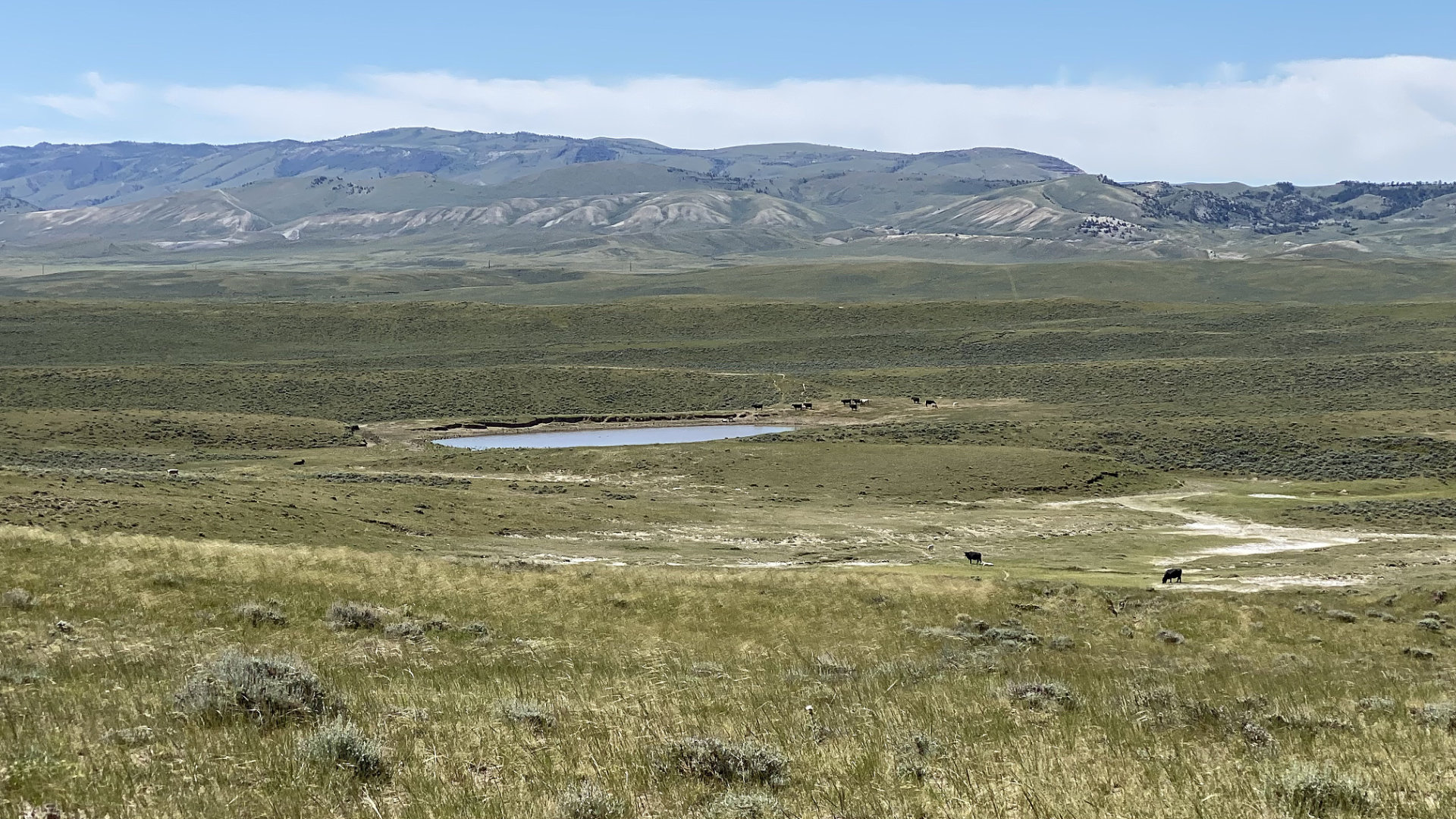
Grass, Water and Terrain
Carrying capacity can be oversimplified in the same way. The phrase may refer to historical livestock use, an agency authorization, an owner’s estimate or a forage-based calculation. Those figures can all be useful, but they are not interchangeable. Livestock class, grazing dates, precipitation, water distribution, range condition and feed inputs determine what a number actually means.
For an owner considering a sale, the objective is not to advertise the highest possible livestock number. It is to give buyers a supportable explanation of the land base and the ranch’s operating history. Distinguishing acreage, stocking rate, animal unit months and carrying capacity helps a broker describe the operation accurately and helps buyers know what to verify.
Total Acreage Is Not the Same as Deeded Acreage
A Wyoming ranch may operate across several types of land. A listing should identify each component rather than combining everything into one unexplained total. Deeded land is owned real estate; state leases, federal allotments and private leases are different interests governed by separate documents and requirements.
This distinction matters because access to non-deeded grazing is not simply ownership of additional acres. The Bureau of Land Management, for example, issues grazing permits or leases that identify terms such as authorized use and season of use. BLM grazing preference is associated with recognized base property, and a purchaser must satisfy applicable agency requirements. Wyoming state grazing leases and private leases are administered under their own terms. A seller and broker should review current records and avoid implying that any authorization or lease transfers automatically.
- Deeded acreage. Land conveyed with the real estate, supported by deeds, legal descriptions, surveys and title records.
- State lease acreage. Wyoming trust land used under a current state lease and subject to the administering agency’s requirements.
- Federal grazing acreage. BLM or Forest Service allotments used under permits or authorizations that specify the allowed use and conditions.
- Private leased acreage. Neighboring or noncontiguous land used under a separate agreement whose term may not match the real estate sale.
Three Numbers That Should Never Be Blended
A clear ranch description keeps three related figures separate. A listing may legitimately present all three, but each should be labeled so a buyer can trace it to the appropriate record or operating history:
- Deeded acres. The land conveyed as real estate, supported by title records, legal descriptions and surveys or other accepted mapping.
- Total operating acres. The deeded land plus identified state, federal or private grazing ground used by the operation. This footprint can change if a lease, permit or authorization changes.
- Authorized or historical livestock use. The animals, AUMs and season shown in current documents or operating records. This is a measure of use, not another acreage figure.
Carrying Capacity, Stocking Rate and Stocking Density

Sheep Grazing Broad Pasture
Carrying capacity is a long-term resource concept. University of Wyoming Extension describes it as the level of livestock use that can be sustained through time without degrading soil and plant resources while maintaining an acceptable level of animal performance. It is an estimate under stated conditions, not a permanent guarantee attached to the deed.
Stocking rate describes livestock use over a specified area and period. A complete rate accounts for the number and class of animals, the land area and the length of use. A ranch may have a long-term estimated carrying capacity while using a lower stocking rate in a drought year, after a fire or while resting a pasture.
Stocking density is different again. It describes the concentration of animals on an area at a point in time and does not include the duration of grazing. That can be useful when discussing a rotation or grazing treatment, but it does not replace a seasonal stocking rate or an estimate of long-term carrying capacity.
This is why a listing phrase such as ‘runs 500 pairs’ needs context. Is that historical use, permitted use, a current stocking plan or an estimate? During which months and years? What size and class of livestock were involved, and how much hay or supplemental feed was supplied? A credible description answers enough of those questions to make the number meaningful.
How AUMs Work
An animal unit month, or AUM, expresses the forage demand of one animal unit for one month. A commonly used reference animal is a 1,000-pound cow with an unweaned calf. Larger cattle and other livestock classes have different requirements, so animal unit equivalents are used to adjust the calculation.
The basic demand calculation is straightforward: number of animals multiplied by the appropriate animal unit equivalent multiplied by months grazed. For example, 100 reference cow-calf pairs at 1.0 animal unit for five months would represent 500 AUMs of demand. That example does not establish the carrying capacity of a property; it only translates stated livestock use and time into a common unit.
The definition and source still matter. A federal permit may state authorized AUMs, an owner’s records may show AUMs actually used, and a forage inventory may estimate AUMs available. Those numbers can differ for legitimate reasons. University of Wyoming Extension cautions producers to confirm that everyone is using the same AUM definition before comparing figures.
Why Carrying Capacity Can Change
Carrying capacity is influenced by much more than the number of acres inside a boundary. Conditions vary across a ranch and from year to year. Factors that can materially affect the number of livestock a ranch can support and the length of the grazing season include:
- Forage and range condition. Soils, plant communities, elevation and management can make one acre substantially different from another.
- Water distribution. Usable forage may remain underused when wells, reservoirs, pipelines or stock tanks do not distribute livestock effectively.
- Season of use. High range, irrigated pasture, hay meadows and winter ground are not available during the same months.
- Precipitation, drought and fire. Grazing capacity varies annually and can fall substantially when forage yields decline.
- Livestock size and class. Cows, yearlings, bulls, horses and sheep place different demands on forage.
- Management and improvements. Rotation, fencing, water development, weed control, hay and supplemental feed can change practical use without changing legal acreage.
Water Distribution Can Be the Limiting Factor
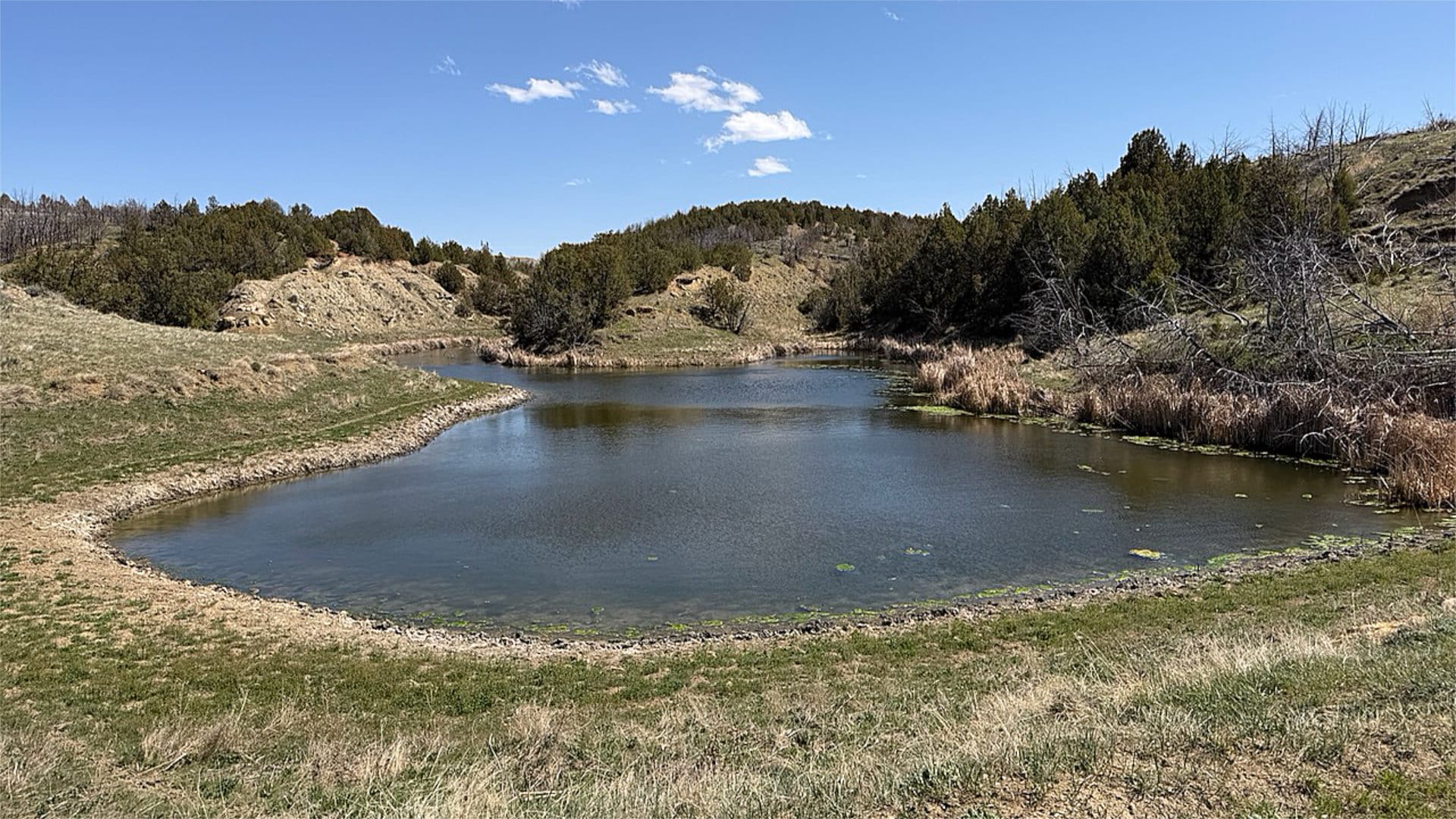
Livestock Reservoir
Water rights, physical water supply and livestock distribution are related but distinct considerations. A ranch may have productive forage that is difficult to use if dependable stock water is not available in the right pastures at the right times. Conversely, pipelines, tanks and well-placed reservoirs can improve distribution and help managers use forage more evenly.
For marketing purposes, a water inventory should connect each source to its location, season of use, reliability and delivery system. A map of wells, springs, reservoirs, pipelines and stock tanks can be more informative than a general statement that the ranch is ‘well watered.’ Legal rights and physical conditions are property specific and should be confirmed through the appropriate records and professional review.
Drought, Fire and Annual Variability Belong in the Record
Carrying capacity varies with forage production. University of Wyoming Extension notes that annual capacity can change, and federal grazing use may also be affected by drought, fire or other resource conditions. A single favorable year should not be presented as though it represents every year.
A useful operating history shows normal years as well as dry years. It records reductions in animal numbers or grazing days, pasture rest, early shipment, purchased feed and other adjustments. This does not diminish the ranch. It gives a serious buyer a better basis for evaluating risk, management flexibility and the amount of working capital the operation may require.
Build the Listing From Records and Operating History
The strongest presentation combines legal and agency records with the owner’s actual operating history. Documents describe what land and authorizations are involved; ranch records show how the operation has functioned on the ground. Neither should be used as a substitute for the other.
For a listing discussion, an owner can begin with a focused set of information:
- Acreage breakdown. Deeded, state, federal and privately leased acres shown separately on useful maps.
- Agency documents. Current permits, allotment records, authorized use, grazing season and annual instructions.
- Historical livestock use. Animal numbers and classes, grazing dates, rotations and drought-year changes.
- Forage and feed records. Hay yields, irrigated acreage, purchased feed and winter supplementation.
- Water and range improvements. Pasture water, wells, pipelines, reservoirs, fencing and livestock distribution improvements.
- Supporting land information. Soil data, ecological sites, range monitoring, grazing plans and qualified estimates.
Questions a Careful Buyer Will Try to Reconcile
A buyer evaluating livestock capacity is likely to compare the marketing description with maps, permits, leases and operating records. Organizing the information before the property reaches the market can make due diligence more orderly and reveal where a statement needs qualification.
Expect a careful buyer to ask questions such as:
- Do the acres add up? The deeded, state, federal and private components should reconcile with the stated operating footprint and maps.
- Does historical use match current documents? The buyer will compare actual livestock numbers and seasons with current leases, permits and annual instructions.
- What happened in dry years? Reductions, shortened grazing seasons and purchased feed help explain the ranch’s variability and resilience.
- How much of the capacity depends on hay or feed? Grazing-only use and a program supported by raised or purchased feed are not the same operating claim.
- Can livestock reach reliable water? Source location, delivery, seasonality and maintenance can matter as much as the existence of water.
- What must be approved or renewed? Agency requirements, lease terms and transfer procedures should be distinguished from the deeded real estate.
Present Capacity as Evidence, Not a Promise
A supported capacity discussion helps buyers understand how land, water, improvements and grazing authorizations work together. It also explains why ranches with similar total acreage can have very different agricultural utility.
Qualifiers such as ‘owner-rated carrying capacity,’ ‘historical stocking rate,’ ‘authorized use’ or ‘permitted use’ identify the source. Dates, livestock class, grazing season and feed inputs provide the context buyers need to evaluate present conditions. If the source is an owner estimate, the listing should say so; if the figure comes from an agency document, the document and its current terms should be available for review.
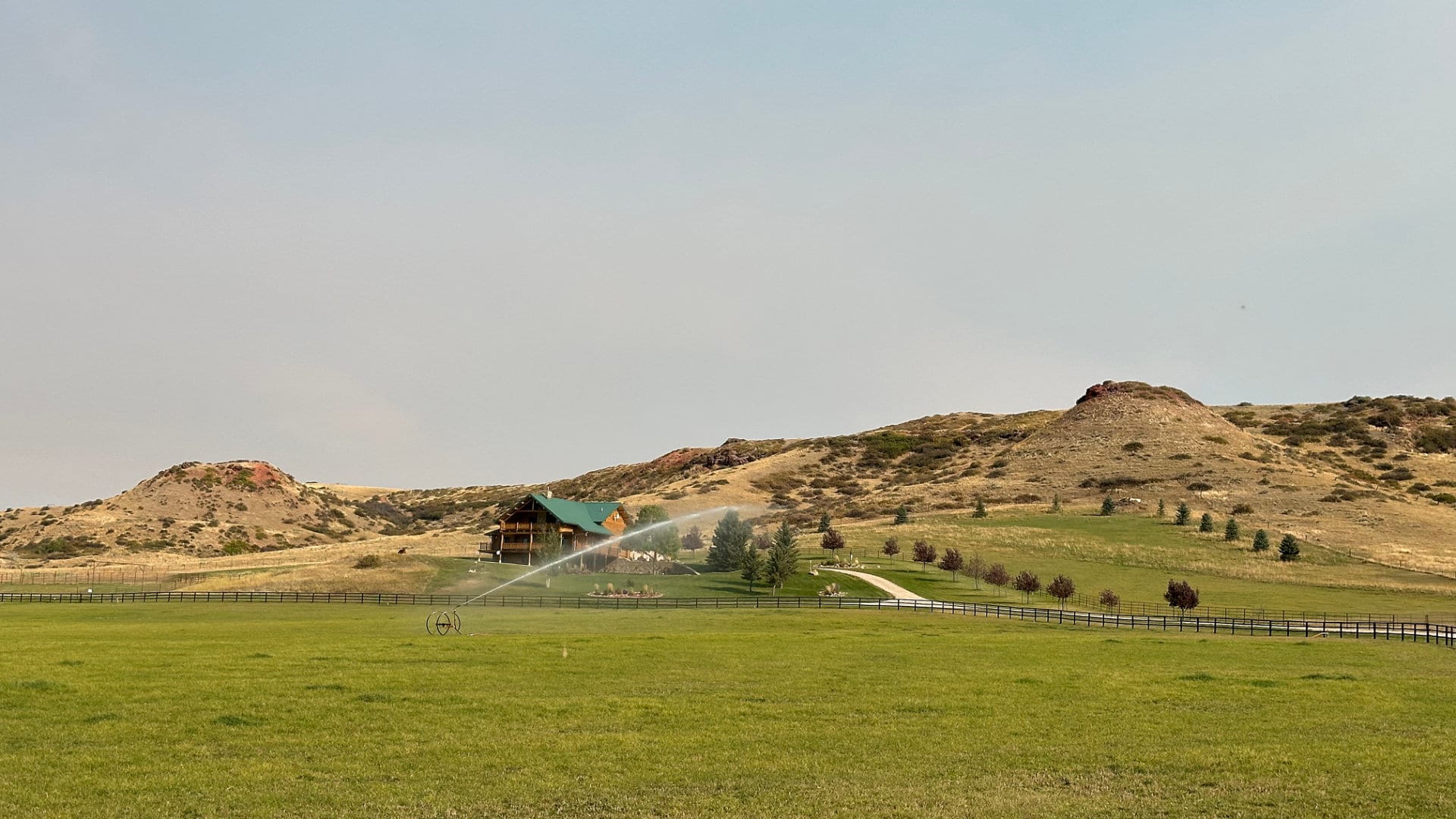
Sprinkler Irrigation
A responsible listing statement might identify the seller’s reported historical use, the years and season involved, the land or authorizations supporting that use and any material feed inputs. It should also make clear that future use depends on livestock size and class, precipitation, forage, water, management and applicable lease or permit terms.
For example, a listing might state: “The seller reports that the ranch historically supported approximately [number] cow-calf pairs from [starting month] through [ending month] during [years]. That use involved [deeded acreage and any identified leases or permits] and included [raised hay, purchased feed or other supplementation]. Buyers should review current permits, lease terms and annual instructions. Future use may vary with livestock size and class, precipitation, forage, water availability and management.” The details in a statement like this should come from the ranch’s records and be tailored to the individual property.
Clear separation of deeded and non-deeded acreage, careful use of AUMs and documented operating history can reduce confusion during due diligence. Accuracy does not weaken a ranch offering. It gives qualified buyers more confidence in the information and helps the market recognize the property’s actual strengths.
Discuss the Ranch Before Settling on a Marketing Number
An owner does not need to calculate a final carrying capacity figure before contacting a ranch broker. An early property discussion can identify which records are available, which statements need confirmation and where advice from an agency range specialist, appraiser, attorney or other qualified professional may be appropriate. The result should be a marketing description grounded in the ranch’s land base and operating record rather than an unsupported number.
Download the Ranch Acreage and Carrying Capacity Guide (PDF)
Discuss Your Property With Chase Brothers
Visit Seller Services or call 844-WYO-LAND to discuss your ranch and request the marketing plan.
General information only. Carrying capacity, leases, permits and transfer requirements are property specific and should be independently verified with qualified professionals.